
Children ages 10 to 12 can start a savings account with a parent’s guidance, then use it to track their balance and work toward a goal. Building money skills for kids ages 10-12 also means deciding what to save, what to spend, and what to share. A simple plan helps make those choices part of everyday life.
It’s natural to want a first account to teach more than where money goes. Invite your child to choose a savings goal, set aside some chore earnings, and notice how small decisions add up over time. These steps can make money easier to talk about and manage together.
This guide covers practical steps for opening a first savings account, saving earnings from chores or helping neighbors, and balancing saving, spending, and sharing. You’ll also learn how to help your child set a goal and track progress without making the process feel complicated.
Key Takeaways
- Make opening an account a shared learning step: compare the account’s terms together and let your child help track the balance.
- Turn chores or age-appropriate neighborly help into a simple routine for setting earnings aside and watching a savings goal grow.
- Use a basic plan to give money a purpose across saving, spending, and sharing, while helping your child weigh wants against needs.
- Keep goal-setting practical with a clear target and a way to record progress, so your child can see how everyday choices add up.
1. Opening a first savings account
A youth savings account gives a child a place to watch money accumulate toward a goal. Start by choosing something meaningful, such as a book, game, or family outing. Then compare account terms together, including how the account works and how to view its balance. Complete the application with a parent or guardian, following the financial institution’s instructions. This makes opening an account a shared task, not just a form to hand over.
Before depositing money, agree on a simple tracking routine. Your child can record each deposit and check the account balance with you regularly. For example, label a page “bike fund,” note chore earnings when they go into the account, and compare the balance with the goal. Talk about compound interest, too: interest added to savings can itself earn interest over time. The account can help your child connect patience with progress, even when deposits are small.
How do debit cards and kids’ banking apps work for ages 10-12? A debit card linked to an account lets its user make purchases using money in that account. A banking app can show the balance and transaction activity, giving you and your child a practical way to review deposits and spending together.
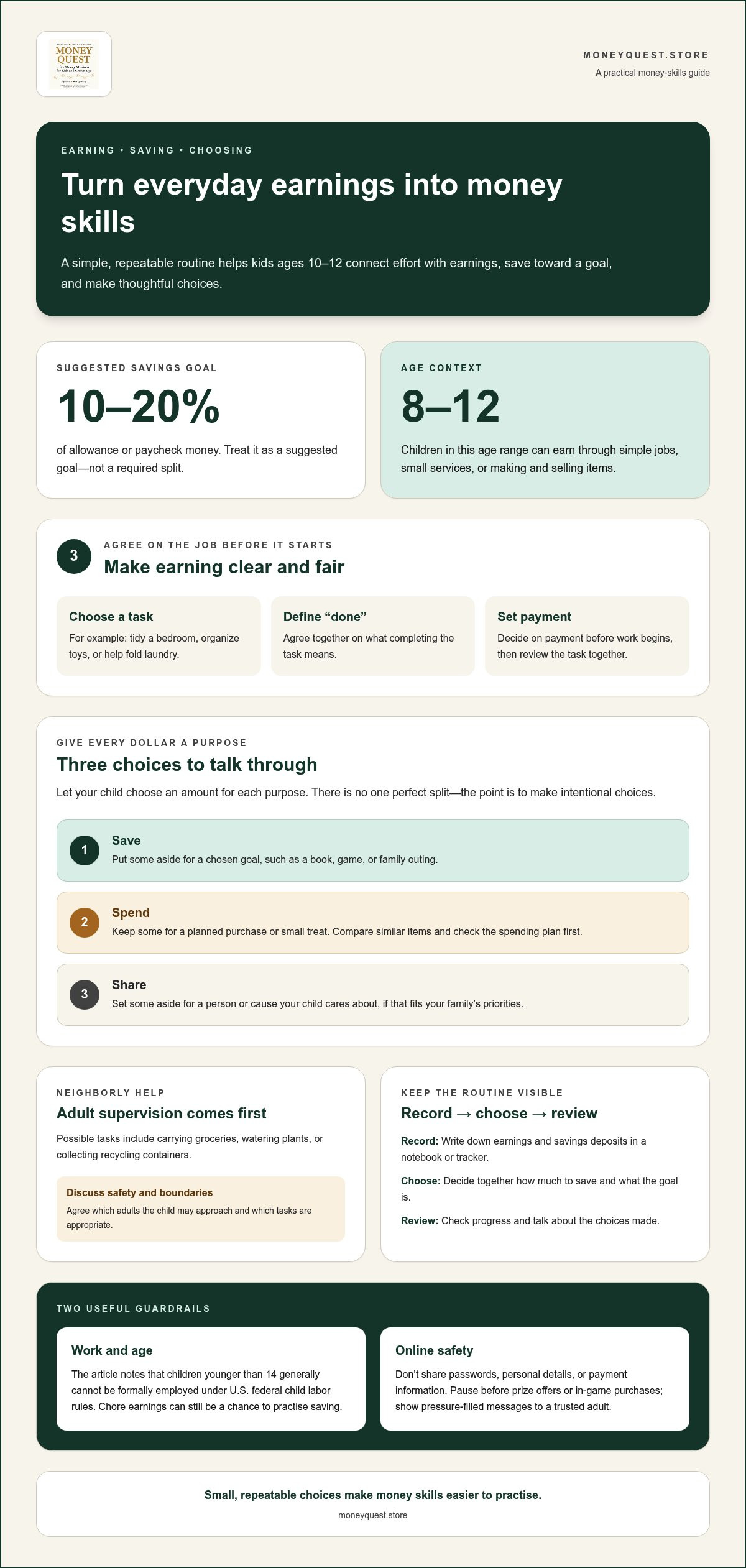
Keep the account connected to age-appropriate ways of earning. According to the U.S. Department of Labor, children younger than 14 generally cannot be formally employed under U.S. federal child labor rules. Chore earnings can still provide a useful chance to practise setting money aside. When a child receives money for a household task, decide together how much goes into savings and record the deposit. Revisit the goal during your next balance check. These small steps build money skills through choices a child can see, discuss, and repeat.
2. Saving earnings from chores and helping neighbors
Make earning money clear by agreeing on the task, completion, and payment before work begins. Household chores might include tidying a bedroom, organizing toys, or helping fold laundry. A regular allowance tied to agreed tasks can help a child connect effort with earnings. Keep the arrangement simple: choose a task, decide what “done” means, then review it together. Children ages 8 to 12 can also earn through simple jobs, small services, or making and selling items.
Helping a neighbor can build responsibility, too. With an adult’s supervision, a child might help carry groceries, water plants, or collect recycling containers. Discuss safety and boundaries first, including which adults the child may approach and what tasks are appropriate. After each job, invite your child to write down the earnings and choose a portion to save. A suggested savings goal for allowance or paycheck money is 10-20%. Use a notebook or savings tracker to record deposits and notice progress.
What online money scams and spending risks should kids ages 10-12 avoid? Teach them not to share passwords, personal details, or payment information, and to pause before clicking prize offers or buying in-game extras. If a message pressures them to act quickly, they should show it to a trusted adult before responding.
What are fun games and activities for teaching money skills to kids ages 10-12? Play pretend shop with household items: let your child set prices, compare options, and decide what fits a set budget. For a hands-on earning activity, plan a small craft sale together and talk through materials, pricing, and what happens to the earnings.
To give these conversations a ready-made structure, try guided money activities for kids and grown-ups. A short activity can turn a chore payment or pretend-shop game into a practical lesson in earning, saving, and making choices.
3. Balancing saving, spending, and sharing
Give each dollar a purpose before your child spends it. A simple plan can divide earnings among saving, spending, and giving. Let your child choose an amount for each purpose, then write down the choices beside the money received. For example, keep money for a longer-term goal separate from spending money for a small treat. Sharing can support a cause or person your child cares about. The aim isn’t to find one perfect split. It’s to practise making intentional choices and seeing what each one leaves available.
How can kids ages 10-12 compare prices and make smart buying decisions? Ask your child to compare the price and usefulness of similar items before choosing. Pause before buying, check whether the item fits the spending plan, and talk through whether waiting would change the decision. This creates space to avoid impulse purchases and explain the reason behind a choice.
Needs are things a child relies on, while wants are enjoyable extras. A child may need a school notebook but want a particular design or extra decoration. Both can matter, but planning for a need first can help prevent spending all available money on wants. Opportunity cost is what someone gives up by choosing one option over another. If a child spends their available spending money on a toy today, that money won’t be available for a different treat later.
Try a “three choices” conversation when money comes in. Ask your child what they want to save for, what they might buy soon, and whether they’d like to share some. Then consider an example together: keep money for a chosen goal, leave some for a planned purchase, and set aside a little for giving if that fits your family’s priorities. Review the choices after the next purchase. Did the item feel worth it? Would your child make the same decision again? These short reflections help saving, spending, and sharing become repeatable habits rather than rules imposed by adults.
4. How should parents teach kids ages 10-12 to save money and set goals?
Start with a goal your child chooses. A sketchbook, sports gear, or a game can make saving feel connected to something real. Ask what they want, why it matters, and how they’ll know they’ve reached the goal. Write the answer somewhere visible, such as a notebook or savings tracker. Parents can build money skills for kids ages 10-12 by connecting everyday routines with a goal the child cares about.
Help your child turn a goal into a simple plan. Record the starting balance, add each deposit, and mark progress toward the target. For example, draw a path toward a new book and color in a section each time money is added. If progress slows, discuss what could change: saving more of an allowance, waiting longer, or choosing a different goal. Keep your child involved instead of changing the plan for them.
Use everyday moments to practise. At the grocery store, compare a planned purchase with your child’s savings goal. After a chore, ask how they want to use the earnings. These conversations connect choices to outcomes without turning every purchase into a lesson. Let children make small decisions, then discuss what they learned.
Review the tracker together during a regular family check-in. Ask what feels easy, what feels difficult, and whether the goal still matters. Notice choices that supported progress, such as remembering to record a deposit or waiting before buying. If the goal changes, update the tracker instead of treating that choice as failure. These routines help make money skills for kids ages 10-12 part of family life, with room to reflect and adjust. Over time, children can practise setting goals, following a plan, and making thoughtful changes.
Moneyquest: Raise Money-Smart Kids PDF
Raise Money-Smart Kids PDF gives families a practical way to keep building the habits covered here. This digital workbook helps parents teach children ages 10-12 about saving, smart spending, budgeting basics, and financial decisions. Its six money missions use hands-on activities to turn ideas into shared practice.
Each mission is designed to take about 15-20 minutes, so you can work through an activity during a family check-in or after a conversation about a spending choice. Across 44 pages, children can practise setting goals, planning a budget, and thinking through everyday money decisions. It’s a useful next step when you want a little more structure for learning together.
Visit moneyquest.store to explore the Raise Money-Smart Kids PDF.
Keep the next money conversation going
A child’s confidence grows through chances to make choices, reflect, and try again. Keep the conversation open beyond a deposit or purchase. Ask what your child would like to understand next, then use a real family decision as a chance to explore it together. That steady curiosity is one way to build money skills for kids ages 10-12 without turning every moment into a lesson.
For a guided way to keep learning together, moneyquest offers the Raise Money-Smart Kids PDF. Its activities can help your family explore new questions and goals as they come up.
Explore the Raise Money-Smart Kids PDF and choose an activity to try together. A calm, ongoing conversation can help your child feel more prepared to make thoughtful money choices.
Frequently Asked Questions
What money skills should kids ages 10-12 learn?
Children this age can practise planning ahead, checking whether a purchase matches their priorities, and explaining a money choice. They can also learn to read a receipt, compare it with what they expected to pay, and spot errors. For example, after a family purchase, invite your child to identify the item, its cost, and how it fits the household’s needs. These everyday conversations can build confidence.
How can kids ages 10-12 make a budget and track spending?
Ask your child to plan for a specific event, such as choosing snacks for a family movie night. Write down the amount available, list possible purchases, and compare the total with the limit before deciding. Afterward, record what was bought and compare the receipt with the plan. This practical example shows how estimates, choices, and actual spending connect, without making a budget feel like abstract math.
What are age-appropriate chores and allowances for kids ages 10-12 in the United States?
Choose household tasks that suit your child’s abilities, such as feeding a pet, sorting recycling, or setting the table. Agree in advance whether each task is part of contributing to the family or earns an allowance, then make the expected result clear. For example, “set the table before dinner” gives a child a specific responsibility. Families can choose an allowance routine that fits their household budget and expectations.
How can parents teach kids ages 10-12 about earning money and entrepreneurship?
Help your child identify a simple need they can safely meet, such as organizing a relative’s digital photos or making a handmade item for someone they know. Plan the task together, note any materials used, and keep a record of money received. Afterward, talk about what went smoothly and what could improve. Adult guidance helps children practise responsibility and communicating with customers.